A City on the Move: The Trends Shaping Adelaide’s Next Chapter
Adelaide is moving forward - but not always in the ways we might expect.
At last week’s Data4Lunch, our speakers explored the latest economic figures, revealing plenty to be positive about: strong visitor numbers, growing spending, major investment in infrastructure and a significant pipeline of defence activity.
But the most interesting story is what is happening beneath the headline numbers - and what it could mean for businesses across Adelaide.
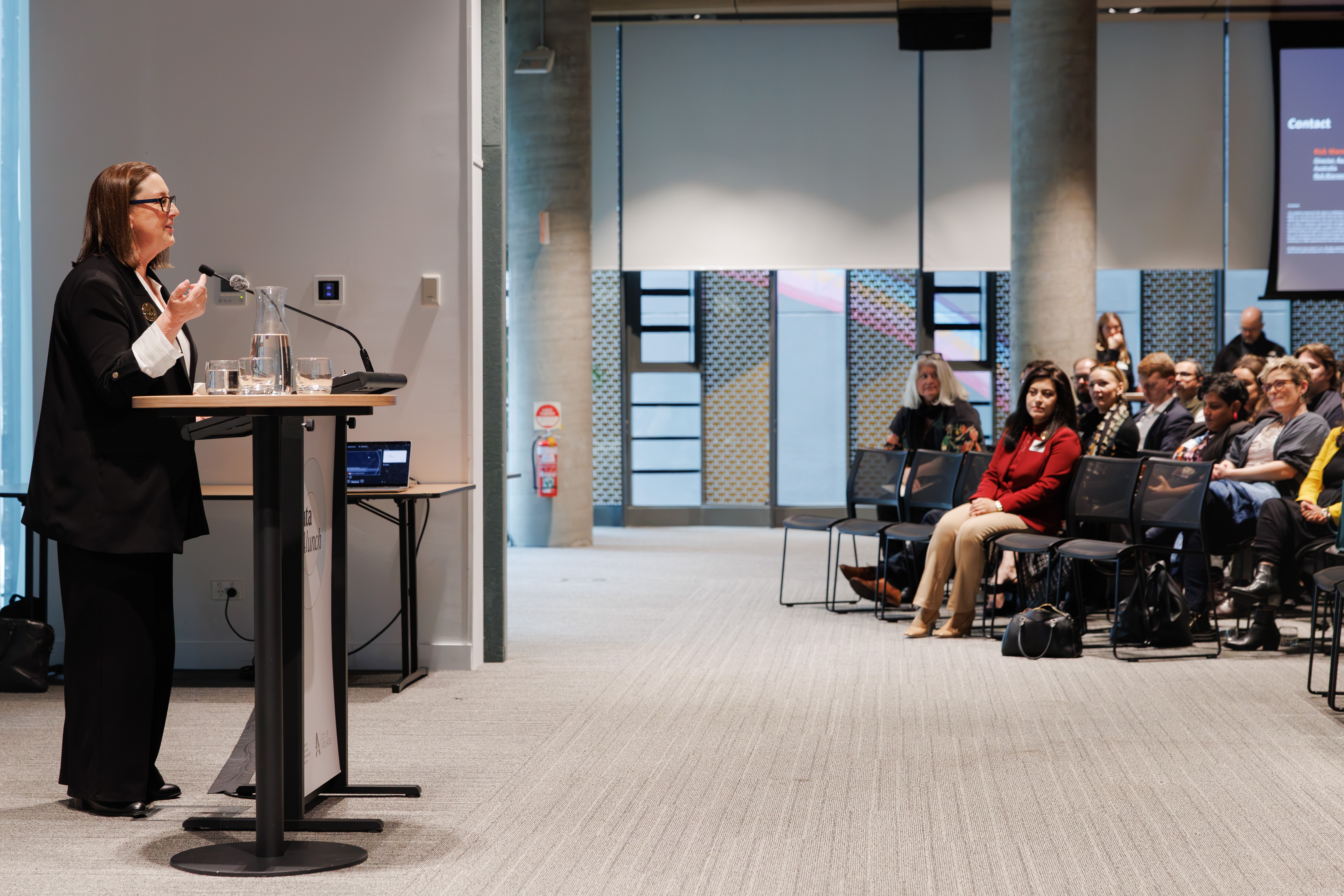
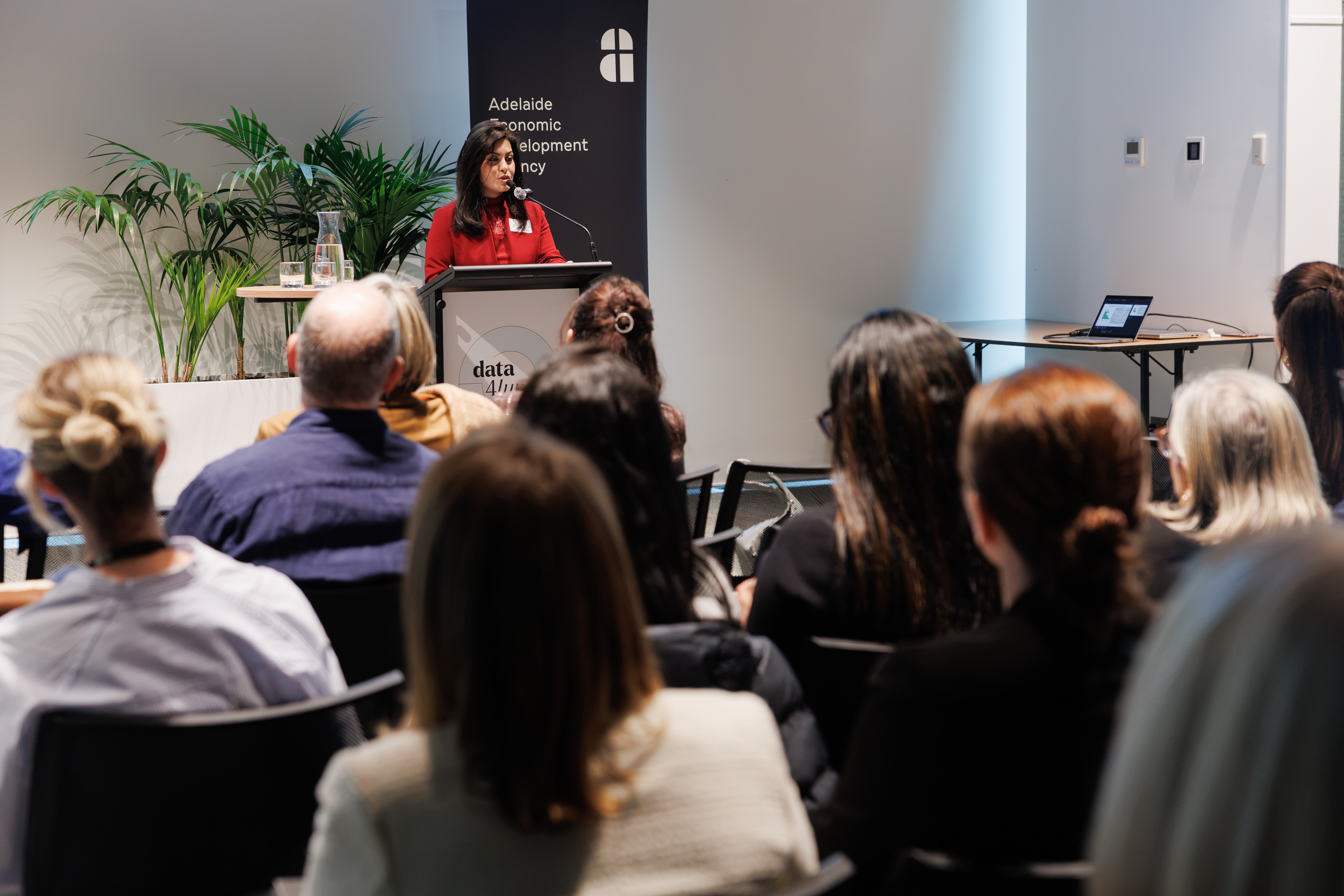
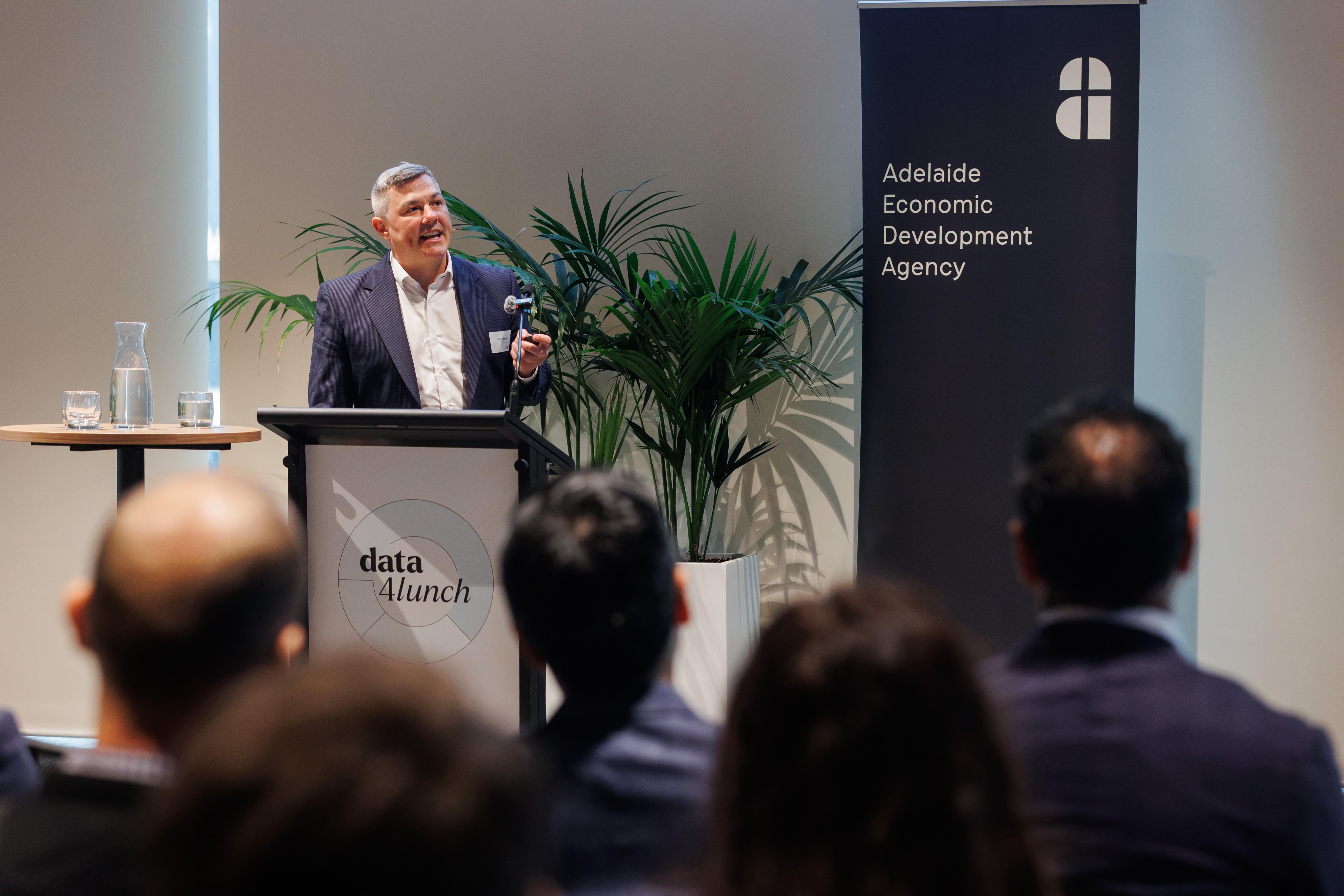
Dr Anita Fairuz, Advisor, Economic Research at Adelaide Economic Development Agency, and Rick Warner, Director Research, South Australia at JLL, unpacked the latest insights at Data4Lunch: Adelaide in Motion, exploring where the economy is performing strongly, how consumer behaviour is changing and what is driving investment across the state.
Together, the insights paint a picture of an economy with solid foundations and several forces that could shape what comes next.
Quick reads:
- The numbers behind Adelaide’s economic resilience
- What $4.33 billion in spending tells us
- Why Adelaide’s biggest events matter
- The investment reshaping South Australia
- What the office market is telling us
- What does it all mean for Adelaide?
The numbers behind Adelaide’s economic resilience
Adelaide has strong foundations to build on.
The City of Adelaide generated $28.23 billion in gross regional product (GRP), while local industry GRP increased 2.4 percent year-on-year to $19.11 billion.
AEDA’s Activity Level Barometer recorded an activity score of 82 in June 2026, pointing to relatively strong conditions across the city.
But the data also tells us that the way people use the CBD is changing.
Dr Anita Fairuz shared research from AEDA focus groups showing that visits to the city are becoming more purposeful, influenced by hybrid work, cost-of-living pressures, transport and parking, competition from suburban centres and online shopping.
In other words, the reasons people come to the city are changing.
The research also identified the factors that can make a visit more appealing, including social connection, events, food variety, special offers, ease of navigation, and perceptions of safety.
For businesses, these insights provide a useful picture of what is influencing visitation decisions and where there may be opportunities to create stronger, more compelling customer experiences.
What $4.33 billion in spending tells us
The scale of spending in Adelaide offers another perspective.
People spent $4.33 billion in the city during 2025-26, up 3 percent.
Of that total, $4.09 billion came from non-residents, highlighting the contribution of people travelling into Adelaide for work, shopping, dining, entertainment and other activities.
That creates an interesting commercial question: how much more value can be generated from the people already coming into the CBD?
A meeting can become lunch. An event can become dinner. A day trip can become an overnight stay.
For businesses, these additional transactions can add up across hospitality, retail, accommodation and services.
The opportunity is not simply to attract people into the city, but to encourage them to stay longer, spend more and experience more of what Adelaide has to offer.
Why Adelaide’s biggest events matter
Adelaide’s events calendar continues to create some of the city’s strongest bursts of activity.
AEDA data showed spending peaks around Adelaide Fringe, Adelaide Festival, WOMADelaide, Gather Round and Tasting Australia.
These events bring large numbers of people into the city, creating valuable trading periods for businesses across hospitality, retail and accommodation.
But their impact extends beyond the immediate event period.
As Dr Anita Fairuz explains:
“Events and activations are a powerful way to support the city economy. They generate direct spending, while also creating broader flow-on benefits across hospitality, retail, accommodation and other parts of the visitor economy.”
The strength of Adelaide’s visitor market is also reflected in the latest figures.
City hotel occupancy reached 72.7 percent in Q2 2026, compared with a national average of 69.3 percent. Hotel revenue increased by 4 percent, while flight passenger numbers rose 2.4 percent compared with Q2 2025.
Together, the figures highlight continued demand for Adelaide and the important role its events calendar plays in supporting economic activity across the city.
The investment reshaping South Australia
Rick Warner’s presentation shifted the focus from current activity to the investment shaping South Australia’s economic outlook.
The state recorded 3.8 percent year-on-year growth in economic output, alongside 5.6 percent growth in household spending and a 11.2 percent increase in export volumes.
Several major projects are set to add further momentum, including AUKUS defence investment, the Torrens to Darlington project, the new Women’s and Children’s Hospital and the Adelaide Airport expansion.
Defence is already making its presence felt in Adelaide.
JLL identified 24 of the world’s top 50 defence primes as having a presence in the city, while defence-related CBD tenants have grown substantially since 2019.
For businesses beyond the defence sector, this investment creates opportunities across engineering, technology, construction, professional services, and specialist supply chains.
It also creates opportunities for local businesses to build capability, develop partnerships, and connect with industries experiencing significant investment.
What the office market is telling us
The Adelaide CBD office market is showing another sign of improving conditions.
Headline office vacancy fell for the third consecutive year to 14.5 percent in Q2 2026, its lowest level since Q1 2020.
The strongest demand is for modern, sustainable and high-quality office space, suggesting businesses are becoming more selective about where they locate and what they offer their employees.
Quality is increasingly part of the equation in attracting people to the workplace. For property owners and businesses, this puts a premium on offices that can support modern work while meeting the standards employees and employers now expect.
What does it all mean for Adelaide?
The insights from Data4Lunch: Adelaide in Motion point to a city economy with several strong foundations.
Economic output remains positive. Spending is growing. Visitors continue to arrive, and major events are generating significant activity.
At the same time, mainstreet vacancy has improved from 13.5 percent in Q1 2024 to 9.0 percent in Q1 2026, although conditions vary between individual mainstreets.
Looking further ahead, major infrastructure and defence investment is creating a substantial pipeline of work, while businesses are showing stronger demand for quality CBD offices.
But perhaps the clearest message is that Adelaide’s next phase will be shaped not by any one of these trends, but by how they connect.
Major investment can create new markets for local businesses. Events can generate trading opportunities across multiple sectors. Strong workplaces can support CBD activity and a thriving visitor economy can bring fresh spending into the city.
These connections are where the opportunity lies.
Adelaide has strong fundamentals. The more interesting question now is how we turn that momentum into lasting activity, investment and growth.
Still hungry? Feed your data appetite anytime, anywhere with AEDA’s interactive dashboards, packed with the latest insights.
To be the first to hear about upcoming AEDA events, subscribe to City Business.