 Frankie the Creative
What could Adelaide become?
A collective vision shaped by the people who care about the city's future.
As part of the AEDA Leaders Forum, AEDA brought together leaders from across business, government, education and the community to explore what Adelaide could look like in 2036. Thinking beyond immediate challenges and opportunities and taking a longer view of the city's future, rather than attempting to predict what lies ahead, the process explored a range of plausible futures to better understand the choices, trade-offs and emerging trends that could shape Adelaide over the next decade.
Why Scenario Planning Matters.
Scenario planning helps a city prepare for futures no one can predict. When businesses, government, universities and not-for-profits explore those futures together, they build a shared understanding of what could change and how they might respond. Each can use that understanding to identify opportunities, guide decisions and find common ground with others. AEDA is part of this community and uses the same scenarios to guide its own work. With the next ten years set to be nothing like the last thirty, this shared understanding helps us rethink what is possible and act together to shape Adelaide’s future.
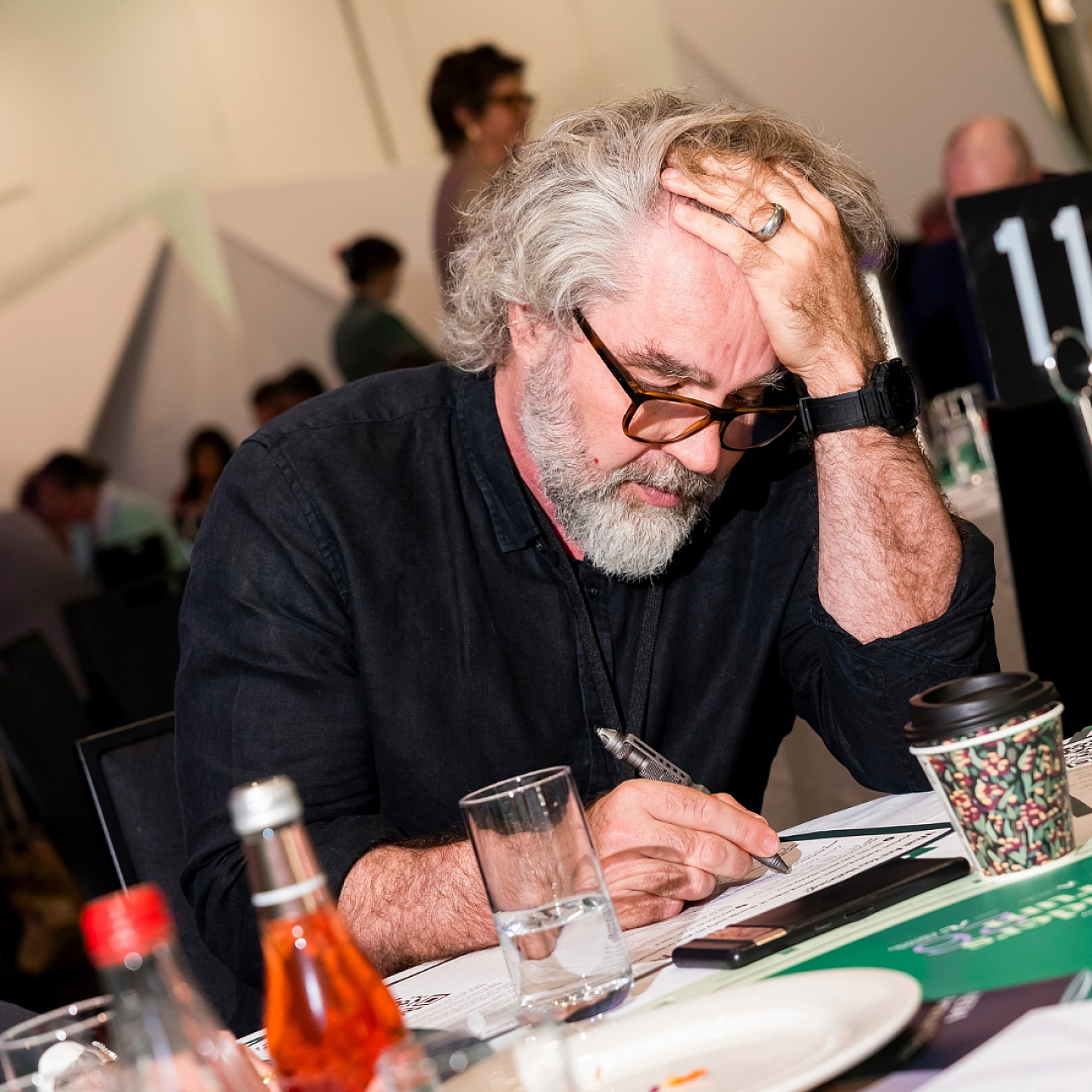
509 responses. One shared vision for Adelaide's future.
In the final session, attendees completed the sentence “By 2036, Adelaide is…” 509 times. A first keyword count groups the responses into seven overlapping themes, listed here from the most common.
The Vision. Seven Themes.
| Theme | What Adelaide looks like in 2036 |
|---|---|
| Connected, welcoming and caring | Neighbours know each other, health and aged care work, and the city walks side by side with Kaurna people. |
| Good jobs, and businesses that start, grow and stay | One response called it a city “Where smart people come to make possibilities real”. |
| Alive all year | Arts, music and festivals fill a city centre that is busy with residents and workers every day. |
| Green, shaded and cool | One response read “Our streets are alive in summer because we invested in shade and cooling”. |
| Known for ideas made real | Research and new businesses thrive, and Adelaide is the place “where hard problems are solved”. |
| Affordable at every stage of life | In one response, “Young people can afford a family and a home; at the same time.” |
| A place young people choose | People are “supported to leave, but always come back to” the city. |
First strategic insights.
These were reported to the room at the end of the day. The table recordings will test each one.
Growth alone does not deliver the vision.
Inequality came up unprompted in all four scenarios, including the boom. How the gains are shared has to be designed in from the start.
Liveability needs upkeep and cannot be taken for granted.
In every scenario it wore down by a different route: crowded out by growth, left unmaintained through drift, lost to heat, or emptied as young people left. The vision puts it at the centre, so treat it as an asset that needs investment.
Every scenario lost young people.
They were priced out in The Lot, uninspired in Mid Strength, driven out in Empty Esky and left without entry-level jobs in Frog Cake. Pathways into work and housing came up as the answer each time, and entry-level roles are a decision every employer controls.
Care work was undervalued in every scenario.
Each one ran short of carers, teachers and health workers, and tables looked to robots and automation to fill the gap. Every other workforce depends on this one, so a shortage here constrains every employer.
Adelaide's connectedness works in two directions.
It makes this the easiest place in the country to get things done, and it can also mean leadership that stays within the same networks. Several tables called the room itself a bubble, so links across groups have to be built on purpose.
Shared spaces do not look after themselves.
Empty Esky showed businesses that sell to markets elsewhere doing well while the city around them declines. Shade, parklands and public life take a deliberate decision, and businesses can lead on it before governments have the social licence to act.
Saying hard things aloud matters.
Many at the Mid Strength tables saw early signs of it in Adelaide today. Drift continues while everyone agrees things are fine, and leaders get backing for courageous decisions when people in rooms like this one say so out loud.
The room has not settled how big Adelaide wants to be.
Some want the fastest-growing capital, and others want the “best big little city” with everything 20 minutes away. One response said the answer depends on defining “what success really is, it might not be population growth”.
Shaping Adelaide's next chapter.
While the scenarios explored different futures, one message came through clearly: Adelaide's future is not predetermined. The city people described in their vision statements will require intention, investment and collaboration across sectors and generations.
The insights gathered through this process are not an endpoint. They are an invitation for continued conversation and collective action.