Shaping Adelaide's Next Decade: Inside the 2026 AEDA Leaders Forum
What could Adelaide look like in 2036? And what decisions do we need to make today to help shape that future?
These questions brought more than 200 leaders from business, government, industry and research together for the inaugural AEDA Leaders Forum on 12 November 2026 at the Adelaide Festival Centre.
Presented by the Adelaide Economic Development Agency (AEDA), in partnership with Adelaide University, the Forum built on several years of successful AEDA Business Summits, taking a new approach through strategic foresight and scenario planning to explore the forces shaping Adelaide's future.
Hosted by Rebecca Morse and facilitated by Professor Ariella Helfgott and Stavroula Adameitis from SA Futures Agency, the interactive program challenged attendees to look beyond immediate priorities, challenge familiar assumptions and consider how Adelaide can navigate an increasingly complex global and economic landscape.
Welcome to Country and opening address
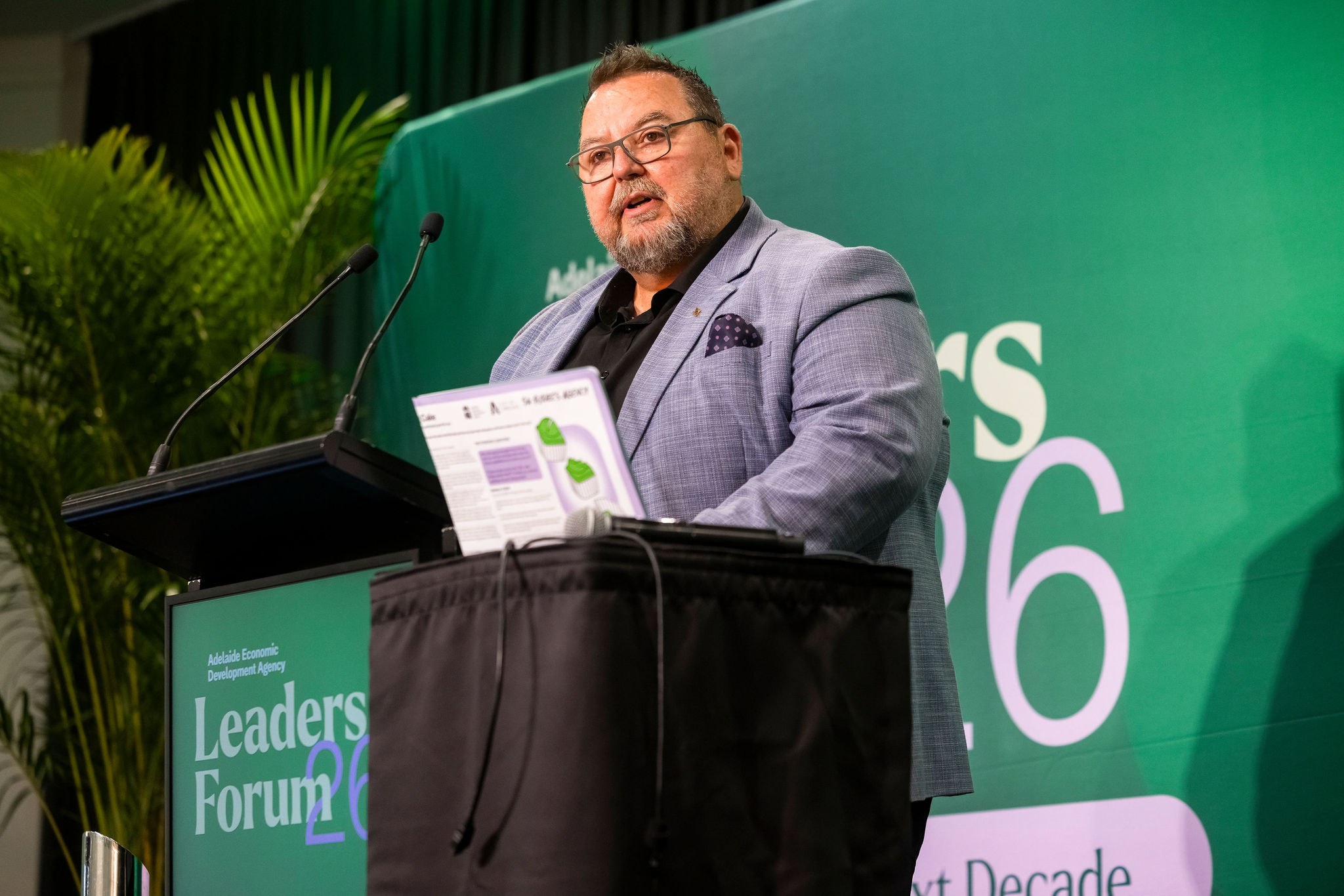
The Forum began with a Welcome to Country from Aunty Ros, highlighting the importance of First Nations knowledge, leadership and aspirations in shaping Adelaide's future.
AEDA Chair Steve Maras officially welcomed attendees, reflecting on how geopolitical shifts, artificial intelligence, climate change and competition for talent are challenging traditional approaches to long-term planning.
While Adelaide has significant opportunities across defence and space, artificial intelligence, cyber security, health, medical research and deep technology, he emphasised that continued success will depend on the city's ability to adapt.
“Strategic foresight and scenario planning is becoming critical for all organisations,” Mr Maras said.
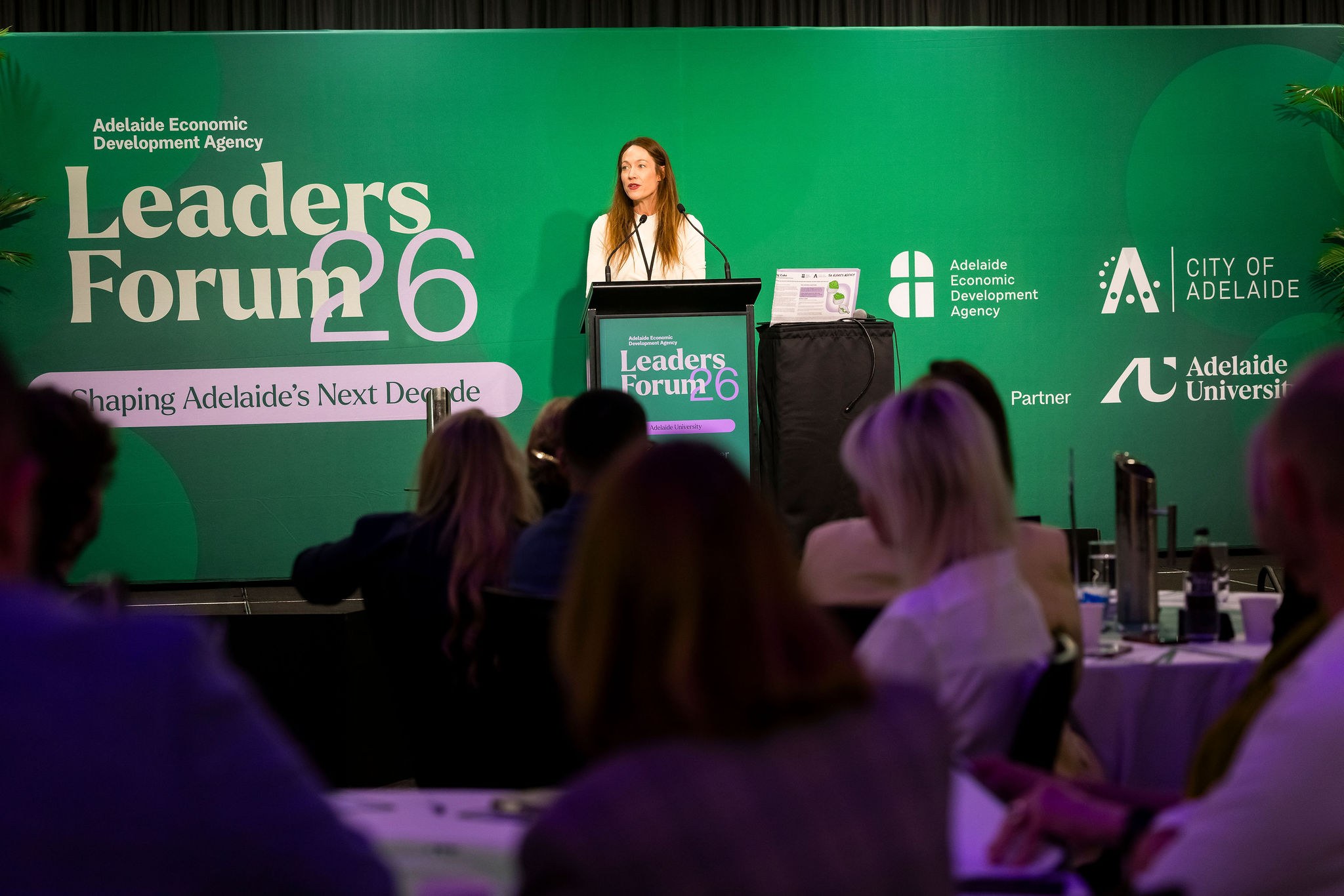
Professor Jessica Gallagher also addressed attendees on behalf of Adelaide University, acknowledging the University's valued partnership and its role in supporting Adelaide's innovation future.
With strong research capabilities and connections between research and industry, Adelaide University has an important role to play in strengthening the city's deep tech ecosystem. Translating research into commercial opportunities, supporting new ventures and developing the capabilities needed to solve complex challenges will be critical to Adelaide's long-term economic growth.
International keynote: Navigating new terrain
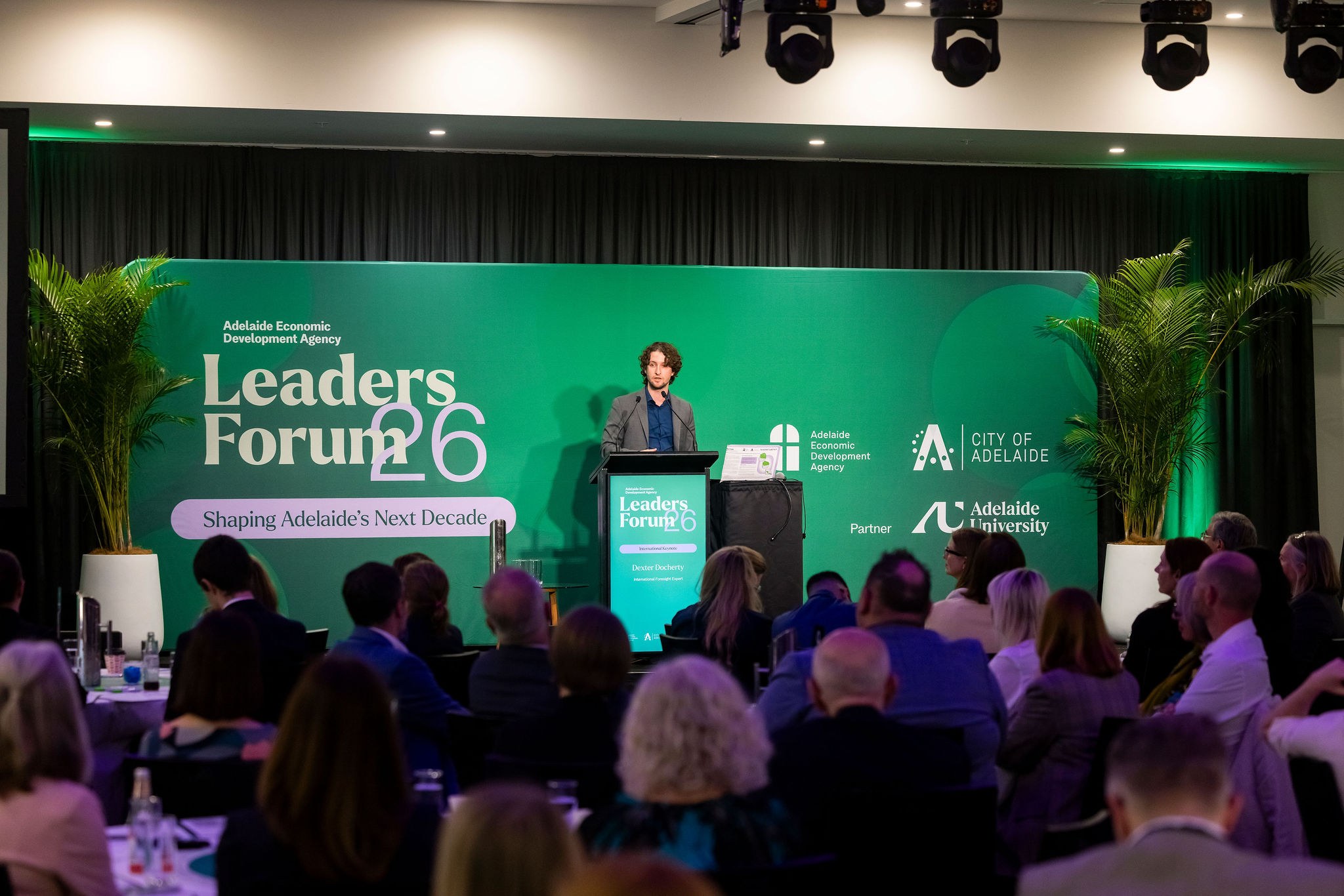
How do cities remain competitive when the rules of the global economy are changing?
International foresight expert Dexter Docherty delivered the keynote address, Navigating New Terrain: Finding Adelaide's Place in a New Geopolitical Era.
Drawing on his experience with the OECD, Policy Horizons Canada and international government foresight programs, Dexter explored how geopolitical instability, ageing populations, climate pressures, technological developments and changing global trade relationships are reshaping the economic landscape.
He highlighted the growing importance of critical minerals, supply chains, artificial intelligence and trust in global finance, with significant implications for Australia's economic resilience and future opportunities.
One of his most memorable messages was to 'think like an octopus'. With much of an octopus's neural network distributed throughout its tentacles, Dexter suggested cities and organisations could benefit from a similar approach: drawing on the collective knowledge and insights of multiple stakeholders rather than relying on centralised decision-making.
For Adelaide, this reinforced the importance of collaboration across business, government, education, industry and research.
Exploring four possible futures for Adelaide in 2036
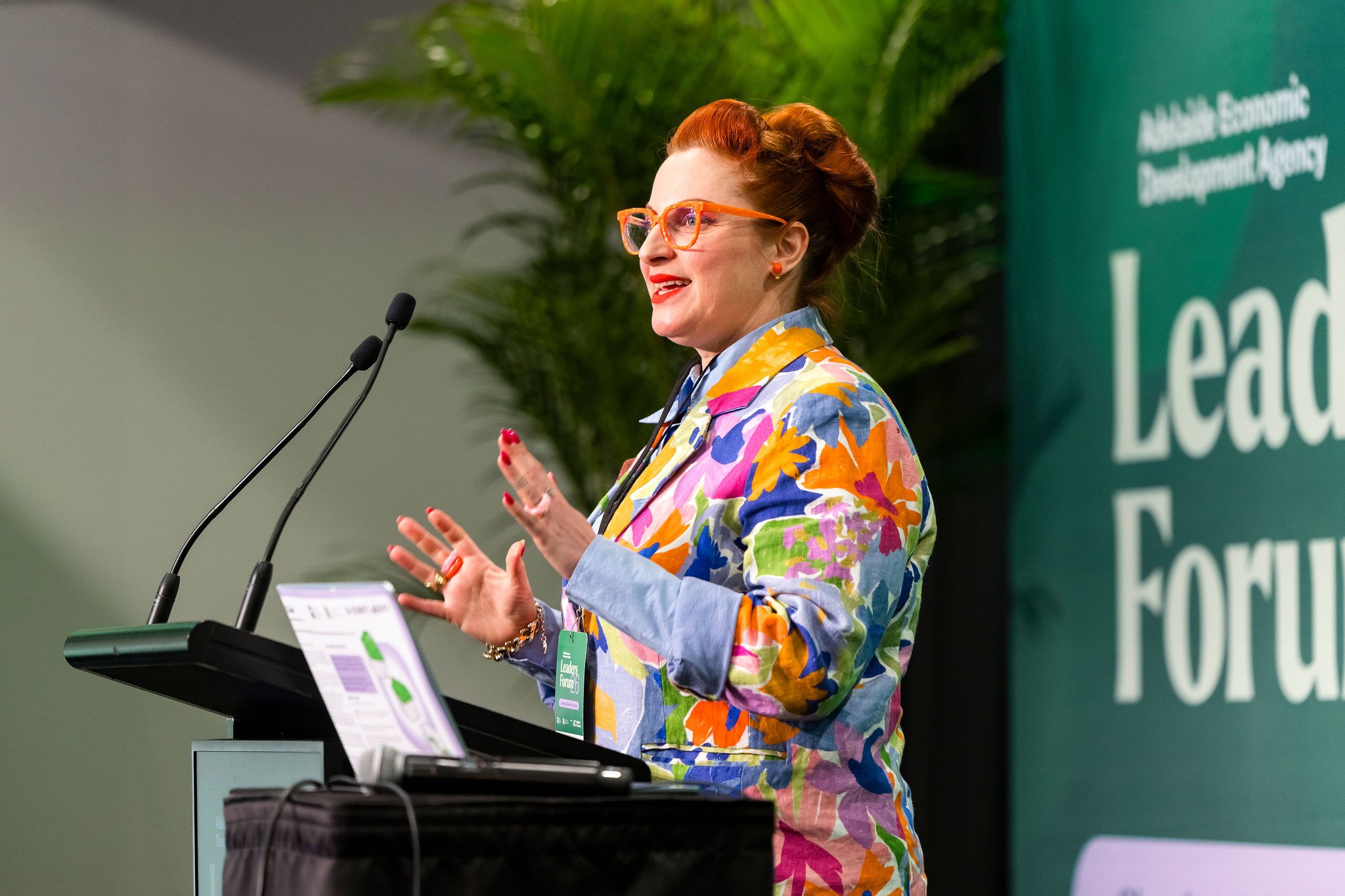
Following the keynote, Professor Ariella Helfgott and Stavroula Adameitis from SA Futures Agency introduced participants to strategic foresight and scenario planning, demonstrating how organisations can prepare for multiple possible futures rather than trying to predict just one.
Through horizon scanning and group discussions, attendees identified emerging trends and uncertainties that could influence Adelaide over the next decade, including:
- Geopolitical instability and changing international relationships.
- Artificial intelligence, digitalisation and technological ethics.
- Socio-economic inequality and social polarisation.
- The energy transition and decarbonisation.
- Climate change, water security and increasing resource pressures.
These discussions informed five critical uncertainties: international alliances and trade, who benefits from artificial intelligence, the impacts of climate change, Adelaide's population growth and retention, and future energy costs and access.
Participants then worked across 26 tables to explore four plausible scenarios for Adelaide in 2036, considering what each could mean for the city's industries, workforce, investment, infrastructure and liveability.
The scenarios were not predictions, but a way to challenge assumptions, test existing strategies and identify decisions that could remain valuable regardless of how the future unfolds.
A key takeaway was that organisations cannot build long-term strategies around a single expected outcome. Instead, they need to consider different possibilities and be prepared to adapt.
Imagining a successful Adelaide
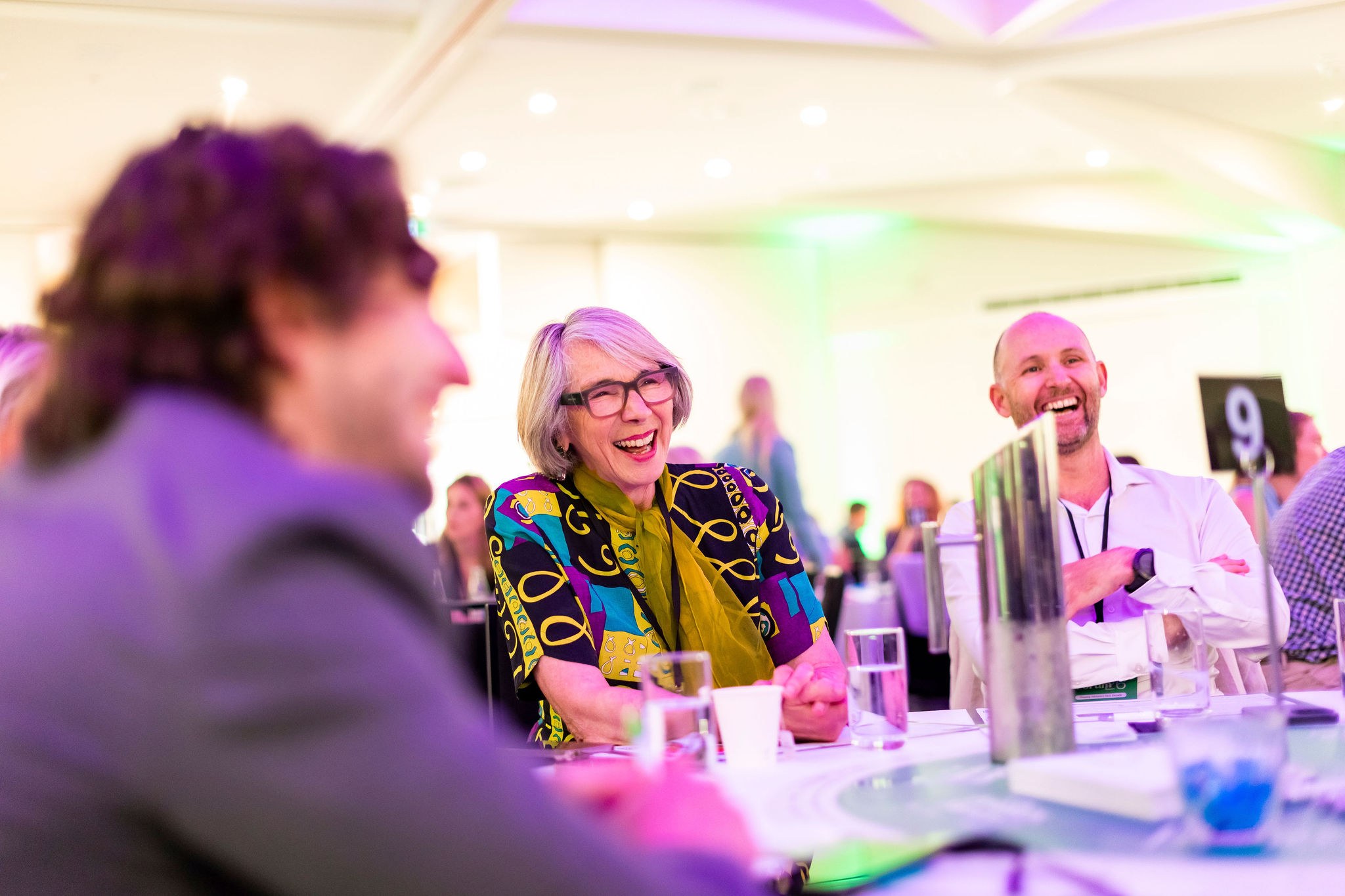
Having explored what Adelaide could become, the Forum shifted its focus to what participants wanted the city to achieve.
Imagining it was 2036 and Adelaide had successfully navigated the decade ahead, attendees contributed their vision through a final group discussion and live Mentimeter activity, responding to the statement: "By 2036, Adelaide is…"
A shared ambition emerged for a city that is connected, welcoming and inclusive, with strong communities and a meaningful relationship with Kaurna people.
Participants envisioned an Adelaide with thriving local businesses, good employment opportunities, a vibrant city centre, and green, shaded public spaces that remain liveable as the climate changes.
There was also a strong desire for Adelaide to be recognised for turning research and innovation into real-world opportunities, while remaining affordable and attractive to people at every stage of life.
Creating a city where young people choose to build their futures, rather than leave to find opportunities elsewhere, was another recurring theme.
Together, these aspirations reflected a vision of Adelaide that is not only economically prosperous, but also liveable, innovative, inclusive and connected.
Turning foresight into action
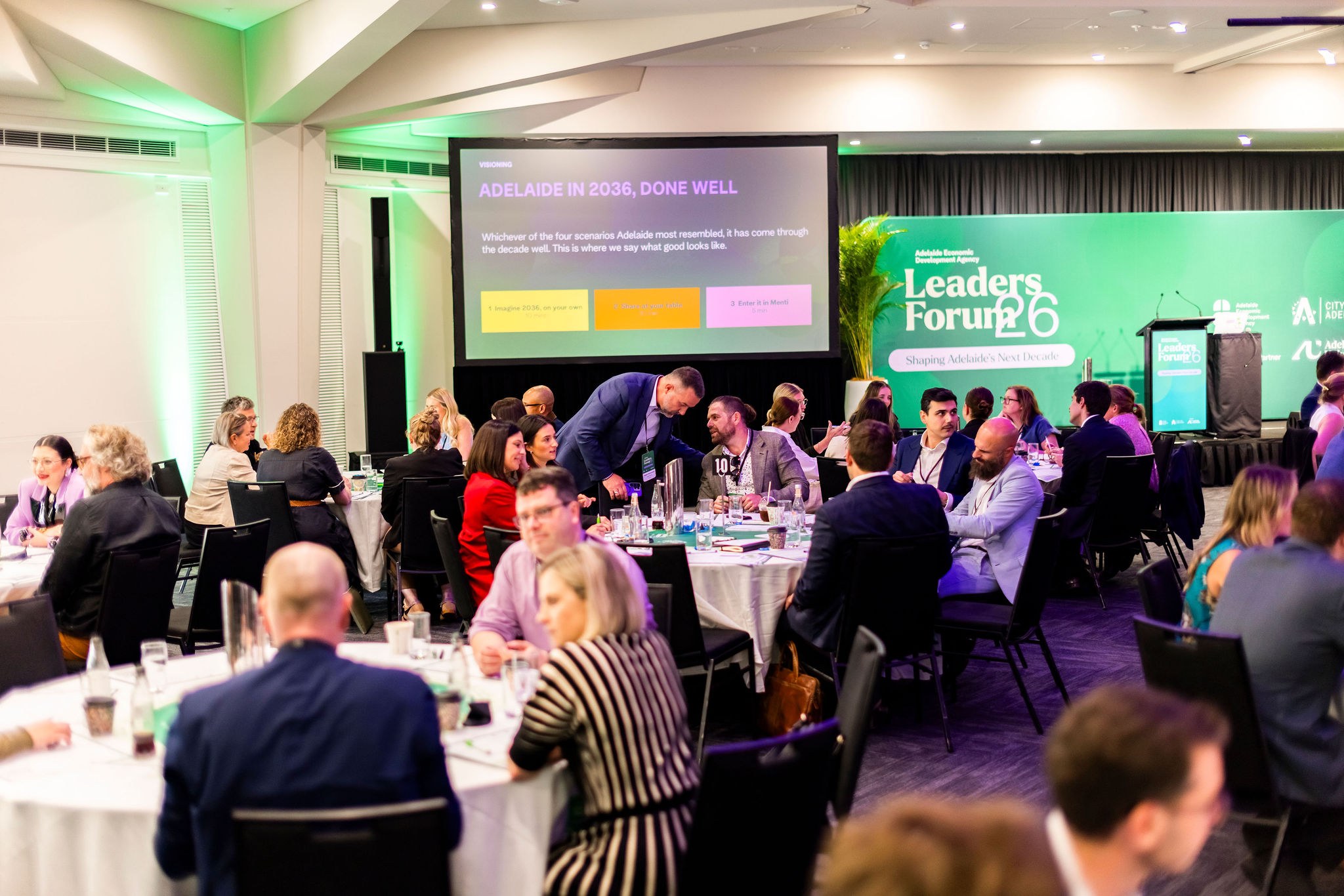
The Forum concluded with a focus on translating these insights into practical decisions that can help shape Adelaide's future.
Several priorities emerged from the day's discussions, including:
- Ensuring economic growth benefits the wider community.
- Protecting Adelaide's liveability through investment in shade, cooling and green public spaces.
- Creating meaningful employment and career pathways for young people as AI transforms the workforce.
- Supporting local businesses, innovation and research commercialisation.
- Strengthening connections between business, government, industry, research and surrounding regions.
These actions highlighted an important message: while the future cannot be predicted, there are decisions Adelaide can make today that will create benefits across a range of possible futures.
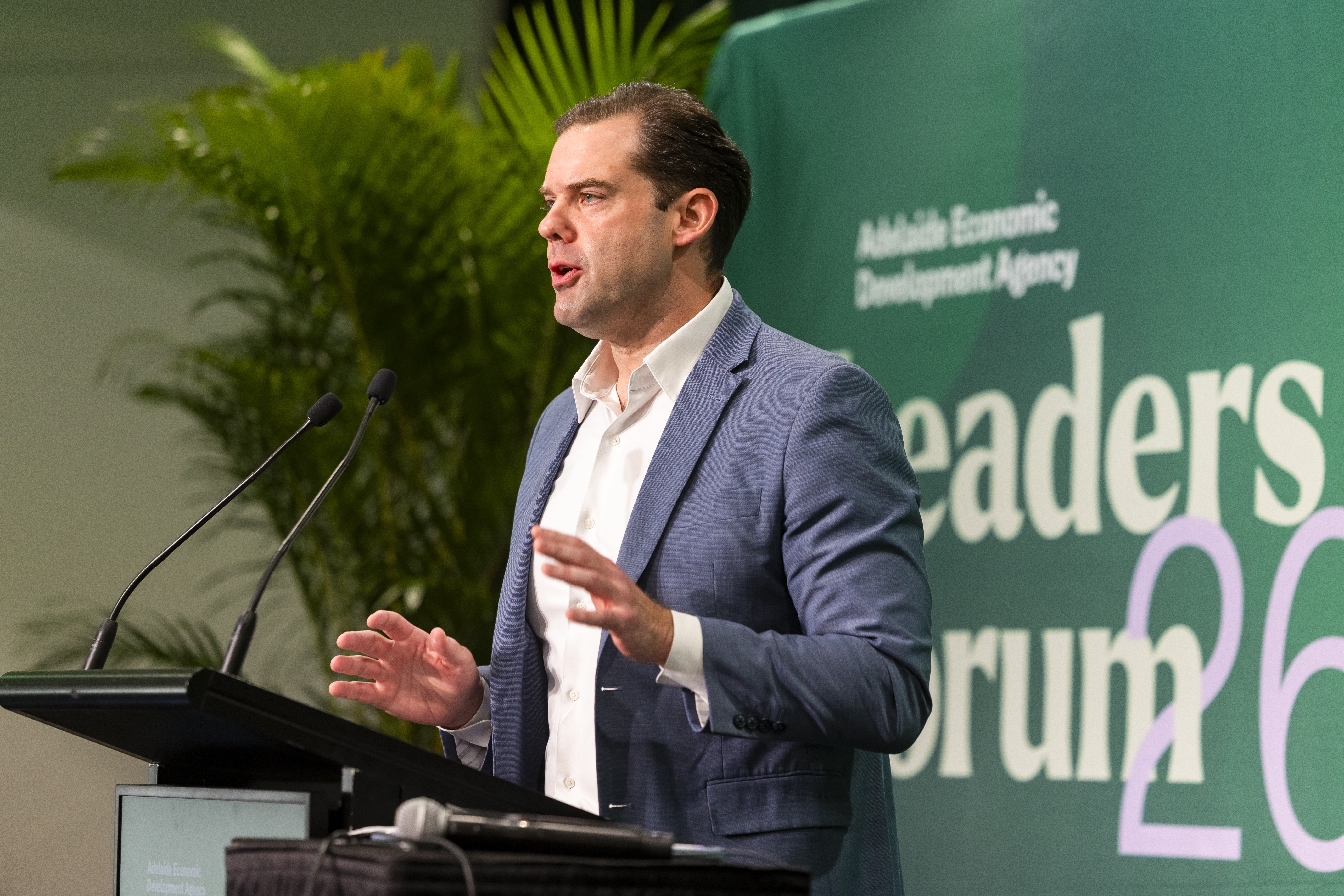
General Manager, AEDA, Andrew White, closed the Forum by thanking keynote speaker Dexter Docherty, SA Futures Agency, Adelaide University, host Rebecca Morse and all attendees for their contributions.
Shaping Adelaide's next decade, together
The inaugural AEDA Leaders Forum provided an opportunity for Adelaide's leaders to step back from the immediate demands of business and consider the bigger picture.
While no one can know exactly what Adelaide will look like in 2036, its future will be shaped by the decisions, partnerships and investments made today.
Through collaboration, strategic thinking and a shared ambition for the city, Adelaide's business and community leaders have an important role to play in shaping what comes next.
And that is a conversation worth continuing.
Images: Frankie The Creative